
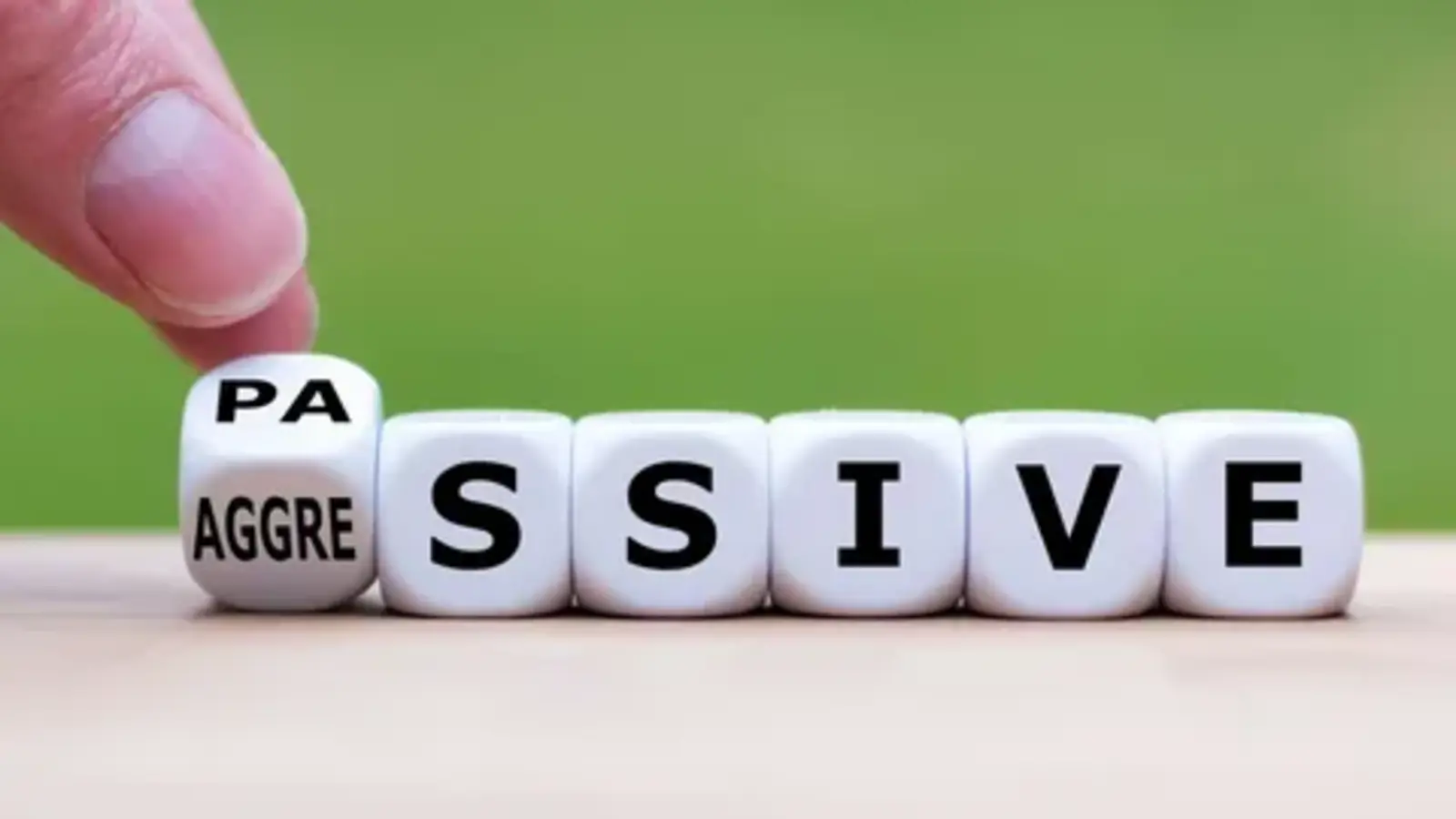
Passive-aggressive behavior involves expressing negative feelings like anger or resentment indirectly through subtle actions, words, or inaction rather than open confrontation.
Top synonyms include sarcastic, backhanded, snide, resentful, subtly defiant, covertly hostile, and two-faced.
For example, instead of saying “I’m upset you forgot,” someone might sigh heavily and say, “No, it’s fine—I’ll just handle it myself.”
Understanding these alternatives helps you communicate more precisely, recognize patterns in others, and build healthier interactions.
What Does “Passive Aggressive” Really Mean?
“Passive-aggressive” describes a communication or behavioral style where hostility, frustration, or resistance is expressed indirectly. It often pairs outward compliance or politeness with underlying opposition—creating confusion and tension for those on the receiving end.
Classic examples include procrastination on agreed tasks, backhanded compliments (“You look great… for your age”), the silent treatment, or sarcastic remarks disguised as humor. This pattern stems from discomfort with direct conflict, fear of repercussions, or learned behavior in environments discouraging open expression.
Why synonyms matter: In professional settings, “passive-aggressive” can sound accusatory. In creative writing or therapy discussions, nuanced terms add depth. Expanding your lexical toolkit improves emotional intelligence, conflict resolution, and writing quality.
An Original Framework: The Passive-Aggressive Lexical Spectrum
To move beyond simple lists, consider this Emotional Intensity & Contextual Spectrum model:
- Low Intensity (Subtle Veiling): Backhanded, evasive, noncommittal – maintains plausible deniability.
- Medium Intensity (Indirect Expression): Sarcastic, snide, resentful – conveys negativity with a layer of wit or compliance.
- High Intensity (Covert Sabotage): Subversively defiant, covertly hostile, underhandedly oppositional – actively undermines while appearing neutral.
Formality Spectrum:
- Informal/Everyday: Snarky, sulky, two-faced.
- Professional: Indirectly resistant, subtly antagonistic, quietly resentful.
- Literary/Academic: Veiled aggression, latent hostility, implicit rebellion.
This framework helps select the right word based on audience, goal, and register.
Semantic Clusters of Passive Aggressive Synonyms
Synonyms cluster by context. Here’s a practical breakdown with details for key terms.
Everyday Conversation & Informal Language
- Sarcastic: Definition – Using irony to mock or convey contempt. Tone: Mocking, biting. Formality: Informal. Best contexts: Friends, family. Collocations: “Sarcastic remark,” “sarcastic tone.” Example: “Oh, great job on the dishes—only took you three days.” Comparison: More overt than “snide”; sarcasm often seeks a laugh, while passive-aggression prioritizes hidden resentment.
- Snide: Sneering or derogatory in an indirect way. Tone: Sly, superior. Example: A snide comment about someone’s “unique” fashion sense.
- Sulky / Sullen: Moodily silent or resentful. Tone: Withdrawn. Common in relationships.
Professional Writing & Business Communication
- Indirectly Resistant: Formal synonym emphasizing non-compliance without confrontation. Tone: Neutral-professional. Usage: “Her indirectly resistant approach delayed the project.”
- Subtly Defiant: Quiet refusal of expectations. Tone: Controlled opposition. Best in leadership or HR contexts.
- Uncooperative: Refusing to work together helpfully. Tone: Obstructive but deniable.
Emotional Expression & Personal Relationships
- Resentful: Harboring bitterness from perceived slights. Tone: Simmering anger. Collocations: “Resentfully compliant.”
- Bitter: Deep-seated negativity from past grievances. Stronger than resentful; implies longevity.
- Backhanded: Compliment masking insult. Example: “You’re surprisingly competent at this.”
Creative Writing, Literary English & Persuasive/Marketing Copy
- Covertly Hostile / Veiled Aggression: Hidden antagonism. Literary feel: Adds psychological depth to characters.
- Two-Faced: Friendly in person, critical behind backs. Tone: Duplicitous. Strong in narratives about betrayal.
- Underhanded: Sneaky or dishonest. Useful in marketing to describe competitors subtly.
Grammar & Usage Notes: These terms are often adjectives (“a sarcastic reply”) or adverbs (“acted resentfully”). Pair with verbs like “deliver,” “mask,” or “display” for natural flow. Avoid overusing in formal reports—opt for behavioral descriptions instead.
Passive Aggressive vs. Related Words: Key Comparisons
- Passive Aggressive vs. Sarcastic: Sarcasm uses irony for effect and can be playful or humorous. Passive-aggression weaponizes it to express unaddressed resentment with plausible deniability. Sarcasm is often direct in intent; passive-aggression is evasive. Choose sarcasm for wit; passive-aggressive labels signal deeper relational issues.
- Passive Aggressive vs. Assertive: Assertive is direct and respectful (“I feel frustrated when…”). Passive-aggressive avoids ownership.
- Passive Aggressive vs. Aggressive: Aggressive is overt (yelling); passive-aggressive is covert (procrastination).
- Passive Aggressive vs. Manipulative: Manipulation seeks control; passive-aggression often stems from avoidance but can overlap.
Decision Matrix for Choosing Synonyms:
| Context | Best Synonym | Why? | Alternative |
| Workplace Email | Indirectly Resistant | Professional, non-accusatory | Subtly Antagonistic |
| Personal Talk | Resentful / Snide | Emotional accuracy | Backhanded |
| Creative Writing | Veiled Aggression | Literary depth | Covertly Hostile |
| Customer Service | Noncommittal | Neutral tone | Evasive |
Related Concepts, Antonyms & Vocabulary Development
Antonyms: Direct, assertive, straightforward, open, candid, confrontational (in a healthy way).
Idioms & Phrases: “Silent treatment,” “backhanded compliment,” “fine, whatever,” “weaponized incompetence,” “foot-dragging.”
Common Mistakes: Confusing occasional sarcasm with chronic passive-aggression. Over-labeling neutral behaviors (e.g., shyness) as passive-aggressive.
Writing & Communication Tips:
- In editing: Replace vague “passive-aggressive” with specific synonyms for precision.
- For learners: Practice rephrasing indirect comments directly to build assertiveness.
- EEAT Insight: As communication evolves in hybrid work and AI-mediated interactions, recognizing these patterns prevents misunderstandings and fosters psychological safety.
Pronunciation Notes: /ˌpæs.ɪv.əˈɡres.ɪv/ – Stress on “gres.”
Practical Examples Across Contexts
- Leadership: A manager says, “If only everyone was as dedicated as you,” while implying the opposite.
- Education: A student agrees to group work but contributes minimally with excuses.
- Public Speaking: Using “some might say” to veil criticism.
FAQ Section
What is a polite synonym for passive aggressive?
Indirectly resistant or subtly defiant.
Is sarcasm always passive-aggressive?
No—context and intent matter. Playful sarcasm differs from resentful jabs.
How do I respond to passive-aggressive behavior?
Address specifics calmly: “I noticed the delay—let’s discuss any concerns openly.”
Are there cultural differences?
Direct cultures (e.g., U.S., Germany) view it more negatively; high-context cultures may normalize indirectness.
Conclusion
This passive aggressive synonym guide equips you with tools for richer vocabulary and better relationships.
By choosing words mindfully, you enhance clarity, empathy, and influence—turning potential conflict into constructive dialogue.

USA-based caption writer creating trendy Instagram captions, TikTok quotes, and creative social media content.